
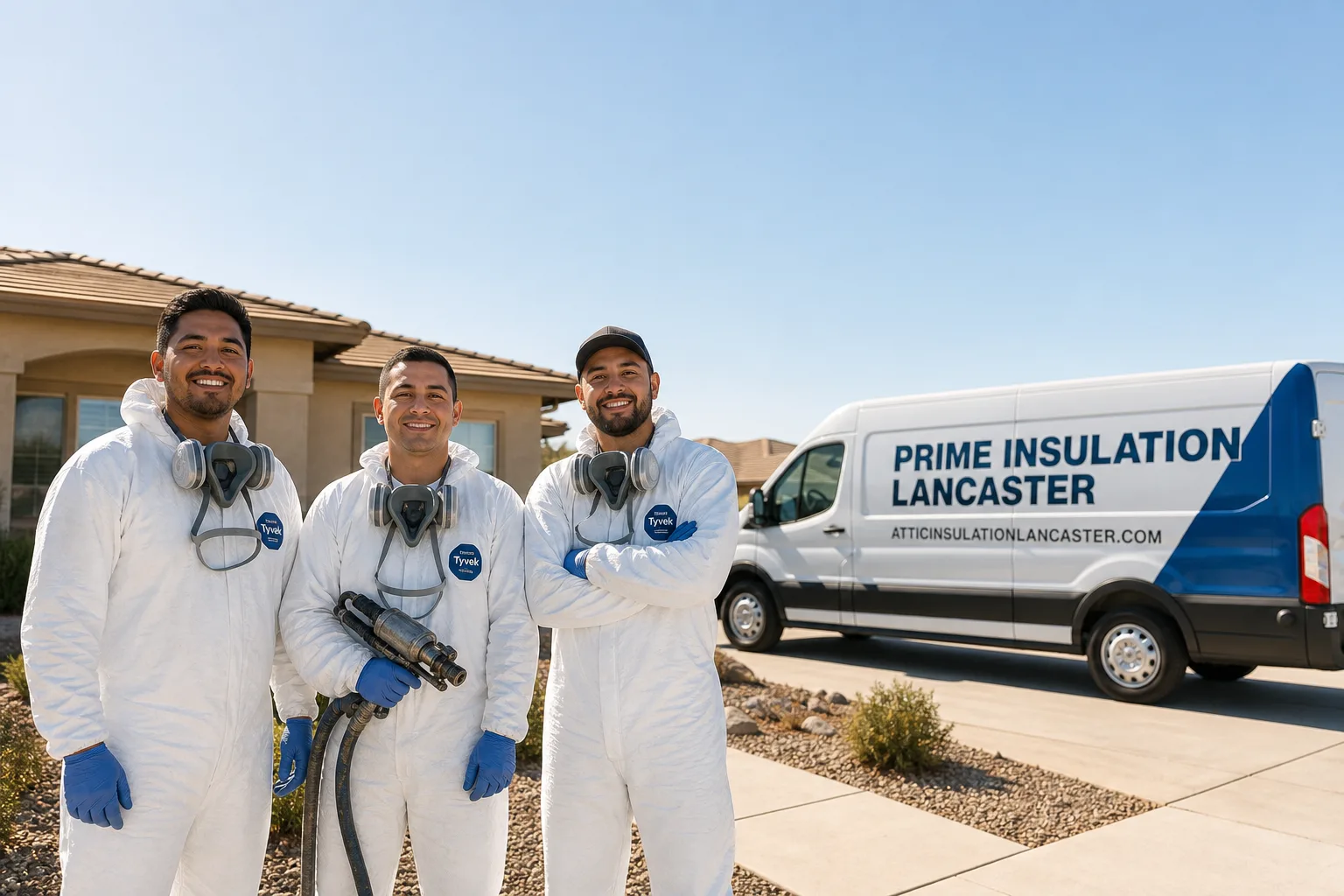
Trusted Crawl Space Encapsulation & Vapor Barrier for Lancaster Homeowners
Crawl space encapsulation in Lancaster, CA typically involves sealing the dirt floor and foundation walls with a heavy-duty vapor barrier, often paired with a dehumidifier to control moisture at the source. We also offer Crawl Space Encapsulation & Vapor Barrier — Palmdale for nearby homeowners. Most Lancaster homes with vented crawl spaces need this work done because the Antelope Valley’s dry surface climate fools homeowners into thinking the air below the house is dry too. It isn’t. We regularly inspect crawl spaces in neighborhoods like Westside Lancaster and Quartz Hill where the soil carries enough residual moisture from winter rains to feed mold, rot, and musty odors for months after the surface looks bone dry.
Prime Insulation Lancaster is led by Noel Estrada, our Owner & Lead Installer. When you call (661) 545-6966, the person who answers your questions is the same person who will crawl under your house, take moisture readings, and physically install your encapsulation system. No sales rep passing your project to a crew you’ve never met. No subcontractor roulette. We diagnose the crawl space first, then build a moisture control system that matches what we actually find down there.
Key Takeaways: Crawl Space Encapsulation in Lancaster
- What it costs: Most Lancaster crawl space encapsulation projects run $3,500 to $8,500 depending on square footage, access height, and whether you need a dehumidifier.
- Why it matters here: Winter rain followed by hot summers creates a damp-crawlspace-to-dry-surface cycle that pulls moisture upward into your living space and framing.
- Who does the work: Noel Estrada, Owner & Lead Installer, personally oversees every encapsulation project from initial moisture audit to final inspection.
- What’s included: Vapor barrier installation, foundation wall coverage, seam sealing, and optional crawl space insulation and dehumidification.
- How fast: Most encapsulation jobs in Lancaster are completed in 1 to 3 days, with same-week availability common outside peak season.
What Our Crawl Space Encapsulation & Vapor Barrier Service Includes
We treat a crawl space as a system, not a single product. Our encapsulation service in Lancaster typically combines several sub-services depending on what the moisture readings and structural inspection reveal. Here’s what each piece involves and when it applies to your home.
Crawl Space Vapor Barrier
A crawl space vapor barrier is a thick polyethylene sheet, typically 10 to 20 mil, laid across the dirt floor and run up the foundation walls to create a continuous moisture block between the soil and your home. You need one when your crawl space has exposed dirt and you’re seeing condensation on ductwork, musty smells upstairs, or elevated indoor humidity that your AC can’t fully manage. We install reinforced liners with sealed seams and mechanical fastening at the foundation walls, not just loose plastic that shifts and tears. This is the foundation layer of any proper encapsulation, and we won’t install insulation or dehumidification without it in place first.
Crawl Space Encapsulation
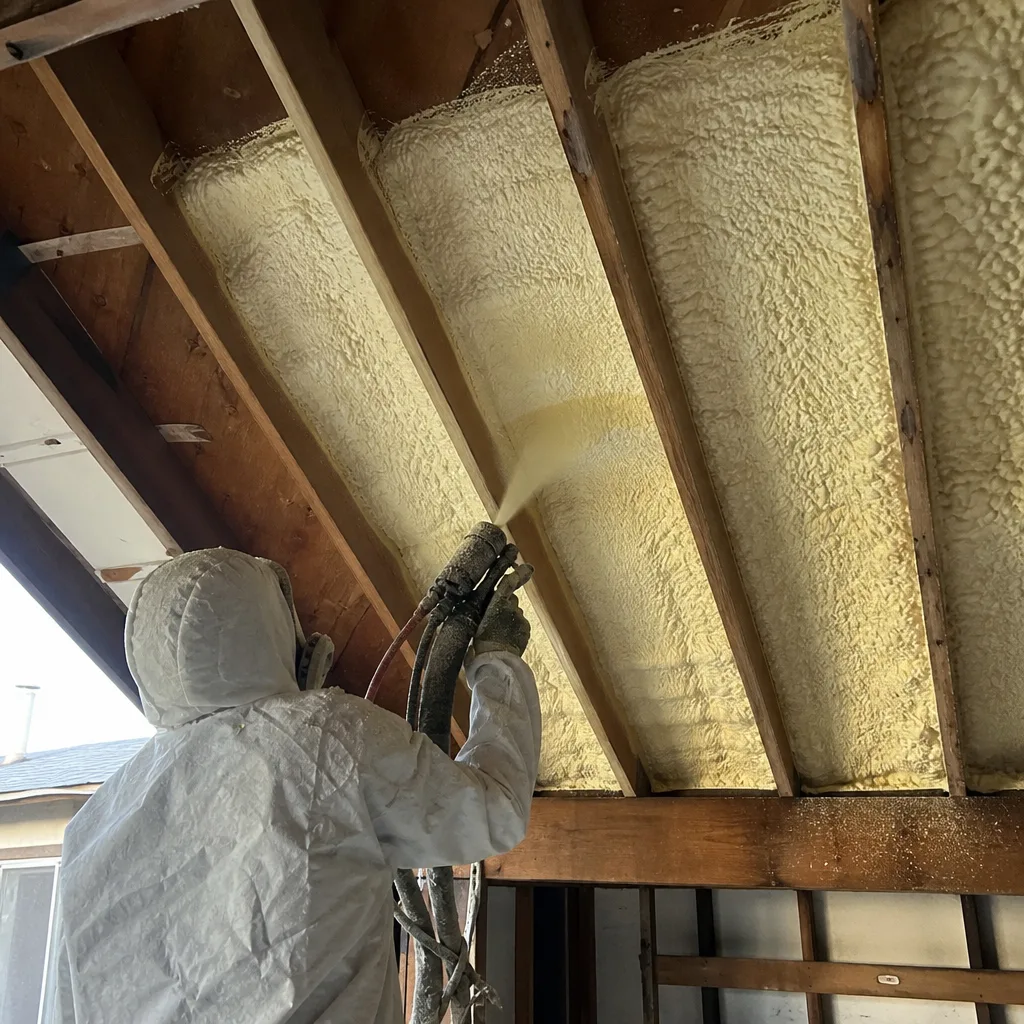
Encapsulation goes further than a basic vapor barrier by sealing the entire crawl space environment: floor liner, foundation wall coverage, pier wrapping, and sealing off all vents and gaps that let outside air in. We recommend full encapsulation when the crawl space actively communicates with your living space through floor joists and duct runs, which is the case in most Lancaster homes built before continuous ridge venting became standard. The goal is to convert the crawl space from an uncontrolled vented cavity into a conditioned, stable microclimate that protects your framing and reduces the stack effect pulling damp air upward. Noel Estrada handles the vent sealing and access door weatherization personally, because those seams are where most encapsulation failures start.
Crawl Space Insulation
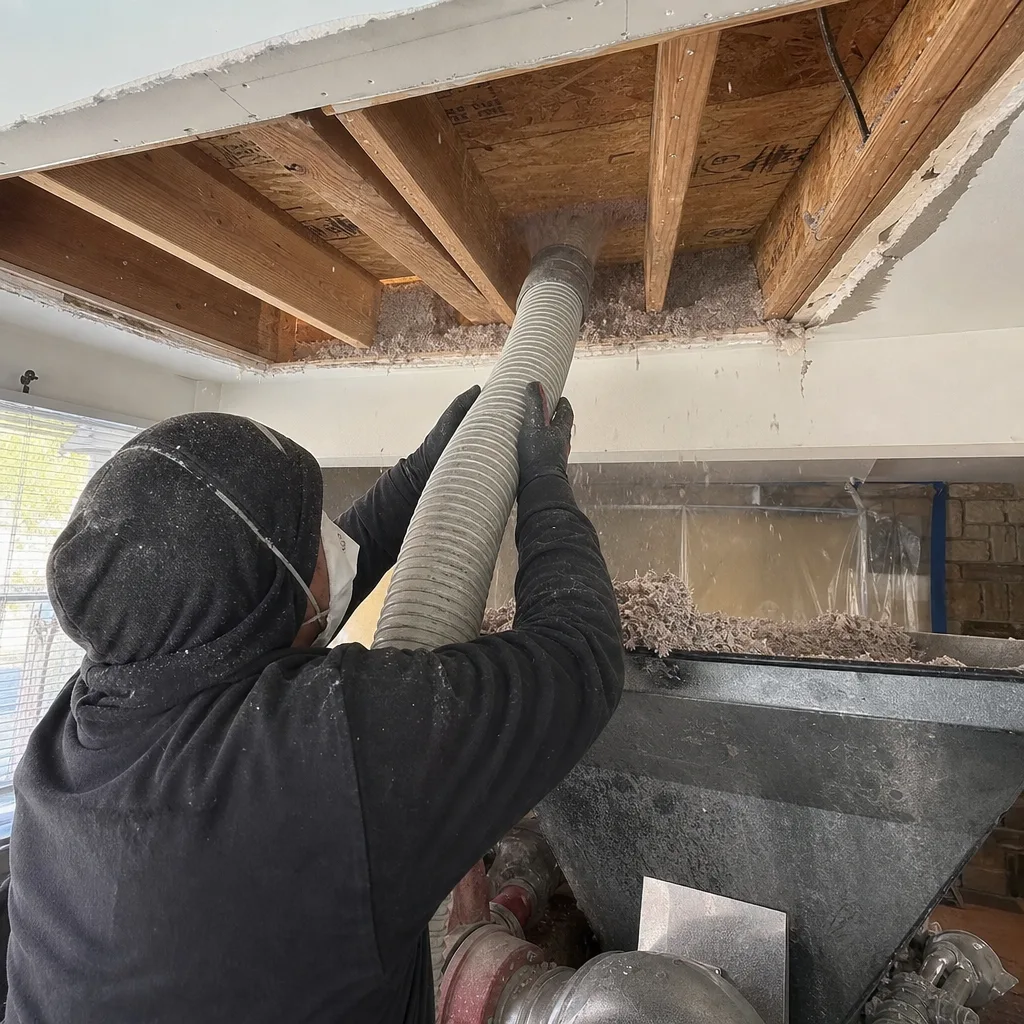
Crawl space insulation involves installing thermal barrier material between floor joists or against foundation walls to stop heat loss in winter and heat gain in summer. Homes in Lancaster neighborhoods like Sun Village and Lake Los Angeles often lose significant conditioned air through uninsulated floors over crawl spaces, especially when ducting runs through the area. We match the insulation type to your crawl space condition: fiberglass batts for dry, encapsulated spaces with limited headroom, or closed-cell spray foam from Demilec or Icynene when we need to insulate and air-seal in one pass. The right choice depends on what our moisture reading tells us, not what we happen to stock that week.
Crawl Space Moisture Control
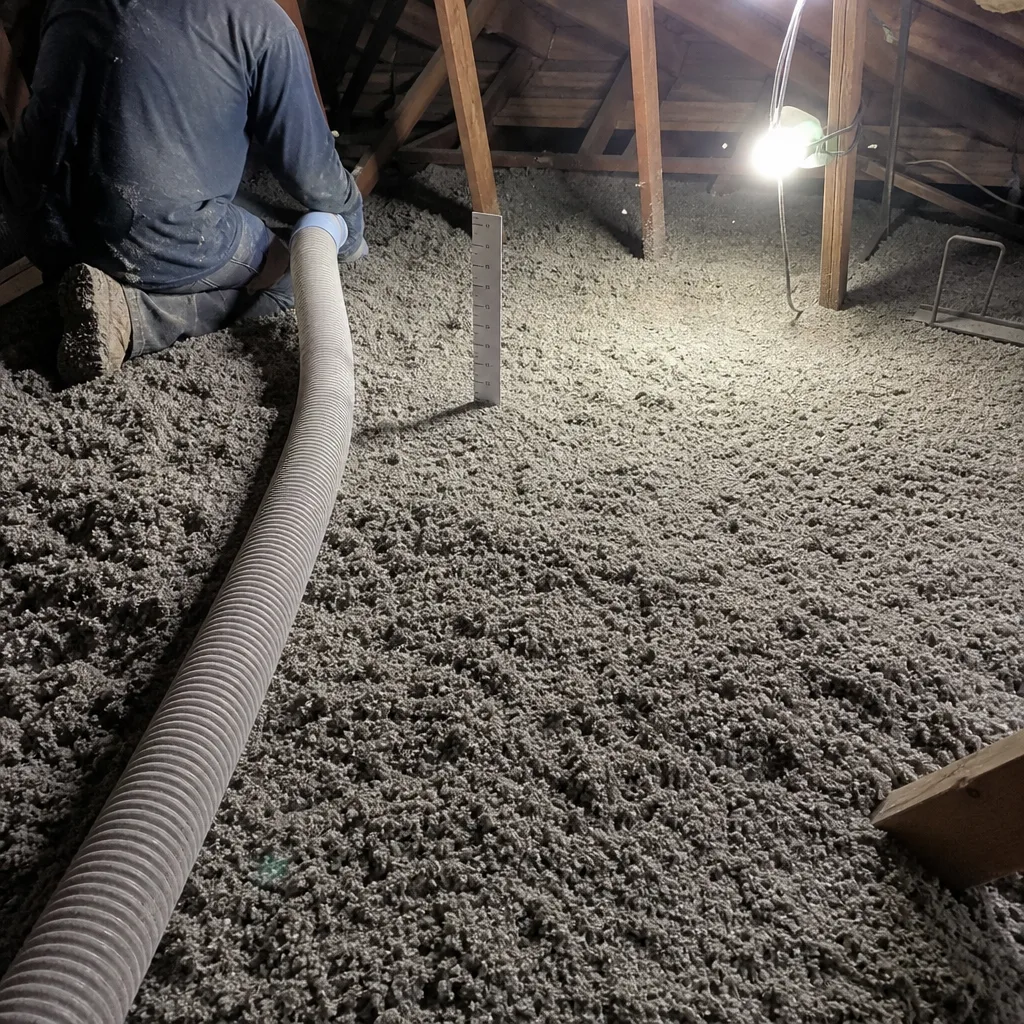
Moisture control is the umbrella term for managing water in all its forms in the crawl space: liquid intrusion, soil vapor, and condensation from temperature differentials. We start with a drainage and grading assessment around your foundation, then address interior moisture with vapor barrier, vent closure, and where necessary a crawl space dehumidifier sized to your square footage and soil moisture load. In Lancaster’s high-desert climate, the damage pattern is slower than coastal areas but more insidious: moisture trapped under a house for six months of the year quietly rots rim joists and feeds dust mites and mold spores that cycle through your HVAC. Prime Insulation Lancaster addresses the source, not just the symptom, by sealing the soil surface and controlling the remaining moisture mechanically.
Crawl Space Cleanout
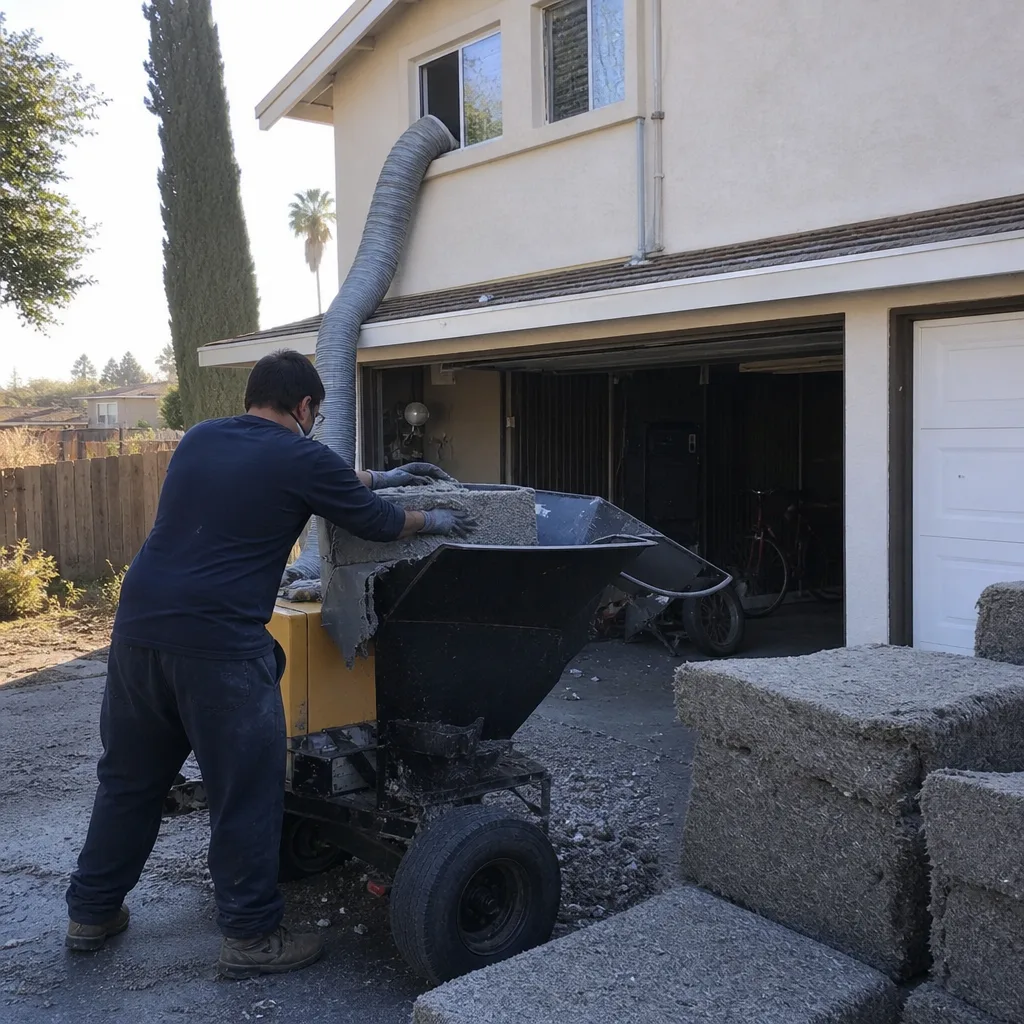
Before any vapor barrier goes down, the crawl space has to be clean. Debris, construction scraps, old rat droppings, and failed insulation all compromise a new liner and create habitats for pests. We remove all loose material, bag and haul it out, and where needed treat the area for rodents and insects before installing anything else. This matters more in Lancaster than people expect: our expansive soils and seasonal rains drive rodents under homes in places like Acton and Littlerock, and we routinely find nests underneath insulation that was installed directly over animal waste by previous contractors. If you’re in Acton, learn more about our Crawl Space Encapsulation & Vapor Barrier in Acton. A proper cleanout is the difference between an encapsulation that lasts decades and one that fails in three years.

What happens when you call
- 1
A real person answersNo phone trees — you reach a local pro.
- 2
You get an upfront price rangeHonest numbers before anyone is dispatched.
- 3
A background-checked tech heads outLicensed & insured, dispatched right away.
- 4
You approve before work beginsNothing starts until you say go.
Brands We Service for Crawl Space Encapsulation & Vapor Barrier
We work with vapor barrier and insulation systems from the manufacturers that hold up in high-desert conditions. Owens Corning manufactures the fiberglass batt and rigid foam board products we frequently install in Lancaster crawl spaces after encapsulation, particularly in homes where the floor joist spacing is standard and the owner wants a reliable, well-understood thermal break. Their faced batts hold their R-value well in our dry climate when installed correctly over a sealed liner.
Johns Manville supplies the polyethylene vapor barrier films and some of the mineral wool products we use for fire-rated crawl space assemblies and higher-temperature applications. We stock their 12-mil and 20-mil barrier rolls for projects where the Lancaster soil has sharp aggregate that would tear a lighter liner. GreenFiber cellulose is a strong option when we need to dense-pack crawl space rim joist cavities in older Lancaster homes where fiberglass would leave gaps and allow air movement through irregular framing. Whether your home needs Owens Corning, Johns Manville, GreenFiber, or another make entirely, we’ll match the product to the problem, not the other way around.
Signs You Need Crawl Space Encapsulation & Vapor Barrier Right Now
- Musty or earthy smell in the house that you can’t source. This is the classic Lancaster crawl space signal. Soil vapor and fungal growth under the house push odors up through floor penetrations and return air paths, and the smell often gets stronger when the AC cycles on. If you’re nose-blind to it, a visitor will tell you within ten minutes of walking in.
- Condensation or rust on ductwork under the house. Sweating ducts in a crawl space mean the dew point is being reached inside your vented crawl space on a regular basis. In Lancaster, this happens most often after winter rains when the soil holds moisture and the surface temperature swings hard between day and night. Rusted ductwork leaks conditioned air into the crawl space, which raises your energy bill and drags humidity into the house.
- Hardwood floors cupping or buckling. Wood movement is a moisture problem before it is anything else. When the crawl space below is vented and the soil is wet, the underside of your flooring absorbs moisture and expands while the top surface stays dry, creating the classic cupped profile. Lancaster homeowners see this most often in track homes built in the 1980s and 1990s with original vented crawl spaces that have never been sealed.
- Visible mold or mildew on floor joists and subflooring. Any dark staining or white fuzzy growth on the wood structure underneath your house means the moisture load has already crossed the threshold where fungal activity starts. In the early stages it’s surface-level; in later stages, the wood starts to soften and lose structural capacity. We’ve inspected Lancaster homes in the Rancho Vista area where rim joists needed sistering because vented moisture had been working on them for two decades.
- Rodent activity or repeated pest problems under the house. Rats and mice seek out crawl spaces because they offer shelter, nesting material, and access to the house above. Once they’re established, they chew through ductwork, insulation, and even wiring. A clean, sealed, encapsulated crawl space is far less attractive to rodents than a vented dirt cavity with fiberglass batts hanging down. We handle rodent proofing and crawl space cleanout before encapsulation so you’re not sealing a problem inside.
Our Crawl Space Encapsulation & Vapor Barrier Process — Step by Step
We follow the same sequence on every Lancaster crawl space job, because skipping steps is how encapsulation systems fail. Here’s how it works when you hire Prime Insulation Lancaster.
- 1
Moisture audit and structural assessment. Noel Estrada begins every crawl space project with a physical inspection of the subfloor, foundation walls, soil condition, and existing insulation. We use a moisture meter to map the moisture content of wood framing and soil across the footprint of the house. This tells us whether your primary issue is soil vapor, liquid intrusion, or condensation, and that determines the entire scope of work. We don’t quote an encapsulation over the phone without seeing the space first.
- 2
Cleanout and pest proofing. We remove all debris, failed insulation, and rodent nesting material from the crawl space. Any entry points for rodents are identified and sealed with exclusion material that will not be chewed through, and we treat the space as needed for insects and other pests. This step matters because the vapor barrier will cover the crawl space floor for decades, and we won’t install a liner over contamination.
- 3
Vapor barrier installation and seam sealing. The barrier is cut to fit your crawl space footprint, run up the foundation walls, and mechanically fastened. Seams are overlapped and sealed with specialty tape or adhesive to create a continuous air and moisture block. We pier-wrap support columns and seal around all plumbing penetrations and electrical lines. The result is a single unbroken barrier that isolates the structure from the soil below.
- 4
Vent sealing and access door work. Crawl space vents are permanently sealed with rigid foam board and sealant, and the crawl space access door is weatherstripped and insulated. This is where many Lancaster encapsulation jobs are done incorrectly: if the vents leak or the access door doesn’t seal, outside air continues to cycle through the space and the moisture control system fights a losing battle. We test the seal with a smoke pencil to verify no air movement remains.
- 5
Insulation and dehumidification as needed. Once the space is sealed, we install the appropriate insulation for your floor joists or foundation walls, and if our moisture calculations call for it, a properly sized dehumidifier. This is where material choice actually matters: in Lancaster’s dry surface climate, some homes need no dehumidifier at all once the floor is sealed, while others need active moisture removal due to soil type and seasonal water table shifts. We only install equipment when the numbers justify it.
How Much Does Crawl Space Encapsulation & Vapor Barrier Cost in Lancaster?
A typical crawl space vapor barrier installation in Lancaster runs $1,800 to $3,500 for a standard 1,200 to 1,800 square foot home, depending on access height and how much foundation wall coverage is required. For more details, see our Crawl Space Encapsulation & Vapor Barrier pricing guide. Full encapsulation with vent sealing, pier wrapping, and access door work typically lands between $3,500 and $6,500. If you add crawl space insulation with fiberglass batts, expect another $1,200 to $3,000 depending on joist depth and material choice. A properly sized crawl space dehumidifier, when needed, adds $1,500 to $2,500 installed.
What drives the price in Lancaster specifically is access. Crawl spaces in older neighborhoods like Eastside Lancaster and homes in Littlerock and Lake Los Angeles often have 18 to 24 inches of clearance, which slows installation and requires more careful seam work. Homeowners in Littlerock can read more about our Crawl Space Encapsulation & Vapor Barrier in Littlerock. Pier-and-beam foundations with many support columns also cost more because every pier has to be individually wrapped and sealed. The best way to avoid overpaying is to work with a contractor who diagnoses first and quotes accordingly, rather than one who prices by square footage alone. Our estimates are always free, always itemized, and always based on what we actually find under your house.
Crawl Space Encapsulation & Vapor Barrier Near Lancaster — Our Service Area
We serve Lancaster and the surrounding Antelope Valley communities including Quartz Hill, Leona Valley, Acton, Sun Village, Agua Dulce, Littlerock, and Lake Los Angeles. We also travel to Castaic, Stevenson Ranch, San Fernando, and La Crescenta-Montrose for crawl space encapsulation projects. Typical response time in Lancaster is same-day for inspections and 1 to 3 days for installation, depending on current schedule. If you’re in Leona Valley or Acton, we’re usually on-site within 48 hours of your call.
We also offer Crawl Space Encapsulation & Vapor Barrier in Quartz Hill and Crawl Space Encapsulation & Vapor Barrier in Leona Valley for homeowners in those communities. For a broader look at our full range of building envelope services, visit our home page or read about Crawl Space Encapsulation & Vapor Barrier in Lancaster in more detail.
Serving Lancaster, CA — Our Local Coverage Area
We’re based in the Lancaster area and know this community well. Use the map below to see our service coverage — if you’re nearby, we can almost certainly help.
Frequently Asked Questions — Crawl Space Encapsulation & Vapor Barrier in Lancaster
Crawl space encapsulation is a complete moisture control system that seals the entire crawl space: floor liner, foundation walls, support piers, vents, and access door. A vapor barrier is one component of that system, typically just the polyethylene sheet laid over the dirt floor. Encapsulation is the right choice in Lancaster when your home has ongoing humidity issues, musty odors, or ductwork running through the crawl space.
Most Lancaster crawl space encapsulation projects are completed in 1 to 3 days. A straightforward vapor barrier on a clean, accessible crawl space can be done in a single day, while full encapsulation with cleanout, vent sealing, insulation, and dehumidifier installation typically runs 2 to 3 days. We’ll give you a firm timeline after the initial inspection.
Crawl space encapsulation in Lancaster typically costs between $3,500 and $8,500 depending on square footage, access clearance, and whether you need a dehumidifier. A basic vapor barrier alone runs $1,800 to $3,500. For an exact quote based on your home’s specific crawl space, call (661) 545-6966 and we’ll schedule a free inspection.
Yes, we regularly install and work with Owens Corning and Johns Manville products in Lancaster crawl spaces. Our experience with these manufacturers means we know their installation requirements and performance characteristics in high-desert conditions. We’ll recommend the right product for your situation, whether it’s one of these brands or another.
We handle urgent crawl space situations in Lancaster, particularly after heavy winter rains when water intrusion or flooded crawl spaces need immediate attention. Call (661) 545-6966 and describe what’s happening; we’ll do our best to get a technician to your home the same day. True emergencies like standing water or active rodent entry get priority scheduling.
Our encapsulation work is backed by a workmanship warranty covering installation defects, and the products we install carry manufacturer warranties that vary by material type. We’ll walk you through the exact warranty terms for your specific system before any work begins. The best warranty is a properly installed system, which is why Noel Estrada personally oversees every encapsulation project.
Clear access to the crawl space entry point is the main preparation needed. Move any stored items or landscaping that blocks the access door, and make sure the area around the house is clear for us to move materials. If you have pets, keep them indoors on installation day. We handle everything else, including hauling away debris from the crawl space cleanout.
Schedule Your Crawl Space Encapsulation & Vapor Barrier Service in Lancaster Today
A damp, vented crawl space is working against your home every day, even when Lancaster’s surface air feels bone dry. Call Prime Insulation Lancaster at (661) 545-6966 for a free, no-obligation crawl space inspection. Noel Estrada will personally assess your crawl space, explain exactly what’s happening under your house, and give you a straight answer on what it takes to fix it. We’re local, we’re thorough, and we do the work ourselves.
Written by Noel Estrada, Owner & Lead Installer at Prime Insulation Lancaster, serving Lancaster and the Antelope Valley.