
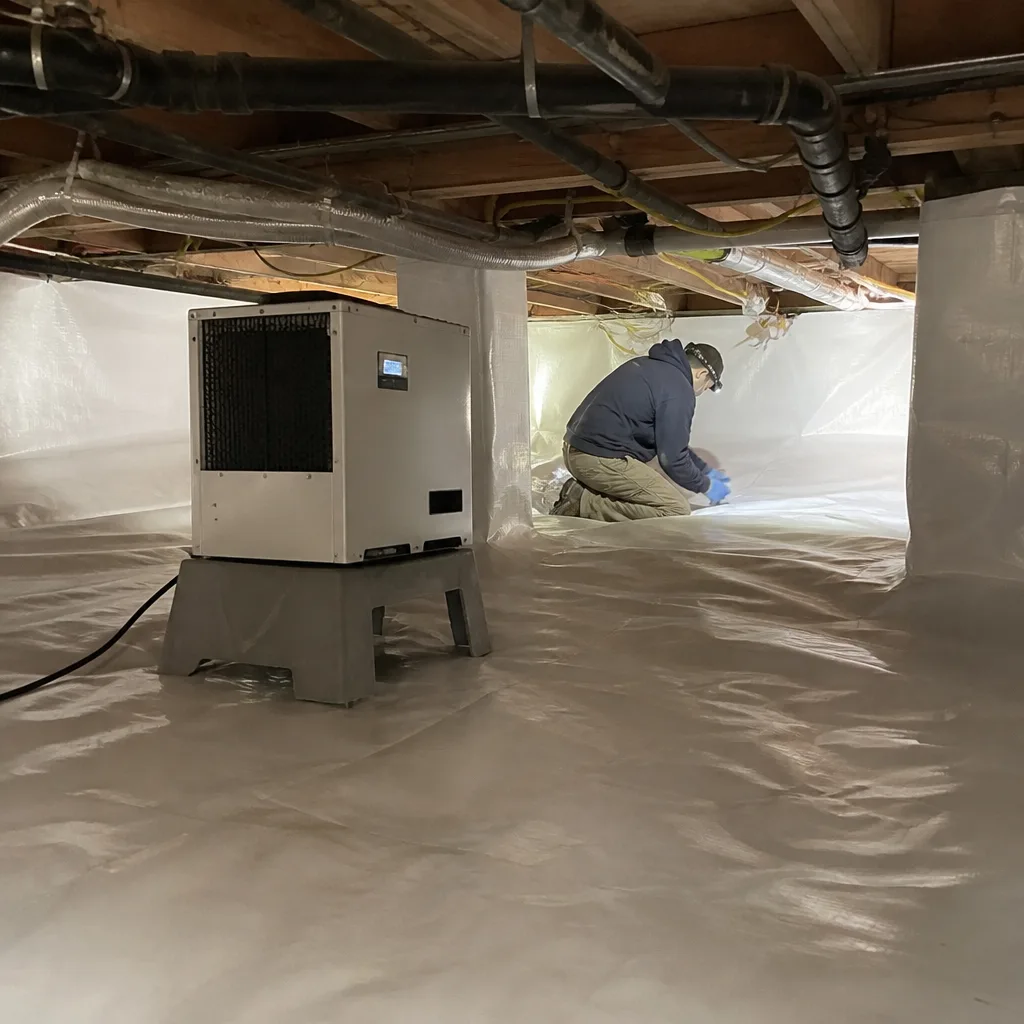
How Much Does Crawl Space Encapsulation & Vapor Barrier Cost in Lancaster?
Crawl space encapsulation in Lancaster, CA typically runs between $3,500 and $8,500 for a full encapsulation with a heavy-duty vapor barrier, depending on square footage, moisture conditions, and whether any existing debris or damaged material needs to come out first. A basic vapor barrier-only installation on a clean, accessible crawl space starts closer to $1,200 to $2,500. Most Lancaster homes we assess fall in the $4,000 to $6,500 range for a complete job done correctly the first time.
Crawl Space Encapsulation & Vapor Barrier Cost Breakdown (2026)
Crawl space encapsulation in Lancaster, CA typically costs $3,500 to $8,500 for a complete system. A vapor barrier installed alone on a prepared crawl space runs $1,200 to $2,500. Most Lancaster homes fall in the $4,000 to $6,500 range for a full encapsulation.
Below is a line-item breakdown of what you’re actually paying for, so there are no surprises when you see a quote.
| Service Component | Typical Cost Range (Lancaster, CA) | Notes |
|---|---|---|
| Vapor barrier only (basic 6-mil poly) | $1,200 – $2,000 | Minimal protection; not a substitute for full encapsulation |
| Vapor barrier upgrade (12–20 mil reinforced liner) | $1,800 – $3,500 | The material we recommend for Lancaster’s occasional hard clay soil moisture migration |
| Full crawl space encapsulation (walls + floor) | $3,500 – $8,500 | Depends on square footage and access conditions |
| Old vapor barrier removal & debris cleanup | $300 – $900 | Older Lancaster homes frequently have deteriorated 6-mil sheeting that must come out |
| Crawl space insulation (after encapsulation) | $800 – $2,500 | Rim joists, perimeter walls, or sub-floor batts depending on configuration |
| Crawl space vent sealing | $150 – $400 | Required for conditioned encapsulation systems; reduces pest entry points |
| Drainage or sump addition | $1,200 – $3,000 | Rare in Lancaster’s high-desert climate but occasionally needed near low-lying lots |
| Rodent proofing & sanitation (if needed) | $400 – $1,200 | Contaminated insulation or droppings must be addressed before new material goes in |
What Pushes the Price Up or Down
Square footage is the most straightforward driver. A 900-square-foot crawl space under a modest Quartz Hill-area ranch costs noticeably less than a 1,800-square-foot footprint under a larger home near Lancaster’s West Side. But size alone doesn’t tell the whole story.
Access height matters a lot. Lancaster has a fair number of older tract homes built in the 1970s and 1980s with low-clearance crawl spaces – sometimes under 18 inches. Working in a tight space takes longer, and labor cost reflects that. If a technician can’t move freely, the job takes longer and the result is harder to verify. That’s one reason the owner of Prime Insulation conducts the assessment personally: what looks fine from a hatch can look very different once you’re on the ground inside.
Condition is the other big variable. A crawl space with intact, clean soil, no standing moisture, and no signs of pest activity is a straightforward job. A crawl space with deteriorated 6-mil poly sheeting, soil disturbance from previous rodent activity, or moisture staining on the floor joists requires remediation before encapsulation even begins. Skipping that step and encapsulating over a compromised surface is one of the most common installation errors we correct in the Antelope Valley area.
What Affects Crawl Space Encapsulation & Vapor Barrier Pricing in Lancaster
- Crawl space square footage: Most Lancaster single-family homes range from 800 to 2,000 square feet of crawl space area. Material costs scale directly with size – expect roughly $2.50 to $5.00 per square foot for liner material alone, before labor and prep work.
- Liner thickness and grade: A 6-mil polyethylene sheet is cheap and temporary. A 12-mil or 20-mil reinforced liner rated for 25-plus years costs more upfront but holds up significantly better under Lancaster’s temperature swings – summer ground temps can push 100°F or more, which degrades thinner materials faster than homeowners expect.
- Existing damage and contamination: Homes in the older neighborhoods near downtown Lancaster or in parts of Palmdale-adjacent tracts frequently have crawl spaces with deteriorated insulation, rodent activity, or previous water intrusion from sprinkler systems or grading issues. Remediation adds cost but is non-negotiable for a lasting result.
- Crawl space height and accessibility: Low-clearance crawl spaces – common in late-1960s and 1970s Lancaster builds – slow down every phase of the job. Materials still need to be cut and fitted precisely; technicians just can’t work as quickly. Labor costs on tight-access spaces typically run 15 to 25 percent higher than on standard-clearance spaces.
- Vented vs. conditioned crawl space design: The Antelope Valley’s wide temperature range (-sometimes 40°F nights in January and 105°F afternoons in July) creates an argument for conditioned crawl spaces where vents are sealed and the space is treated as part of the building envelope. That design requires sealing all vents and often adding rim joist insulation, which adds to the scope and cost but pays back in comfort and energy use.
- Whether additional work is required: Crawl space encapsulation is rarely a standalone service on older Lancaster homes. We regularly find that a complete job also requires vent sealing, rodent proofing, or sub-floor insulation replacement. Getting those services done in one visit costs less than scheduling them separately – which is a practical reason the owner of Prime Insulation reviews everything during the initial assessment rather than limiting the scope to what was originally requested.
Lancaster’s Climate and Why It Actually Matters Here
Lancaster sits in the Mojave Desert at roughly 2,300 feet elevation. Most homeowners assume a desert climate means moisture is never a concern in their crawl space. That assumption causes real problems. The Antelope Valley clay soils hold water from winter rains and release it slowly through the spring, creating ground moisture that migrates upward into unprotected crawl spaces from roughly December through April. We see it consistently in homes from Quartz Hill to East Lancaster. By the time that moisture shows up as musty odors inside the house or visible efflorescence on the foundation walls, it’s been working on the floor joists for months.
The extreme summer heat compounds the issue in a different way. Desert heat at ground level can partially collapse thin vapor barriers that were never rated for those temperatures, leaving gaps that defeat the whole purpose. A properly rated liner – 12-mil minimum, 20-mil preferred for homes with any history of moisture – handles Lancaster’s temperature extremes without failing mid-cycle.
How to Save on Crawl Space Encapsulation & Vapor Barrier
Bundle Services in One Visit
The biggest legitimate savings come from combining work rather than scheduling it piece by piece. If your crawl space needs a vapor barrier and you also have deteriorating sub-floor insulation or a rodent issue, addressing all of it in the same mobilization costs less than three separate visits. We do a full assessment at the start and scope everything we see – not to upsell, but because doing one part correctly often depends on the other parts being in order. There’s no point installing a 20-mil liner over a floor joist system with damaged insulation and active pest damage.
Address It Before It Gets Worse
This is straightforward math. A crawl space with early-stage moisture and a clean soil surface is a $3,500 to $5,000 job. That same crawl space two years later, after a rodent colony has shredded the existing insulation and moisture has begun to darken the floor joists, is a $7,000 to $10,000+ remediation and encapsulation project. Lancaster homeowners who call us after seeing the first warning sign – a musty smell in a room above the crawl space, elevated energy bills, or evidence of rodent activity near the foundation – almost always pay significantly less than those who wait.
Understand What You’re Comparing
When you collect multiple quotes for crawl space encapsulation in Lancaster, the numbers only mean something if the scope is identical. A quote for a 6-mil poly sheeting installation looks much cheaper than a quote for a 20-mil reinforced liner with wall coverage and vent sealing. They are not the same job, and they will not perform the same way. Ask each contractor exactly what mil-thickness liner they’re using, whether wall coverage is included, and what happens if they find existing damage during the job. A quote that goes up the moment the crew opens the hatch is a red flag.
Look Into Utility and Energy Efficiency Programs
Southern California Gas and SCE both offer energy-efficiency rebate programs that can sometimes apply to insulation improvements connected to encapsulation work. Eligibility depends on your specific situation, so we recommend checking current program availability when you get your estimate. We can walk you through what documentation would be needed at the time of the assessment.
Get the Free Estimate First
The owner of Prime Insulation personally performs or oversees every assessment. You’re not getting a salesperson with a tablet running numbers – you’re getting the person who will actually do the work, telling you what the crawl space actually needs. Call (661) 545-6966 to schedule a free, no-obligation estimate. The assessment takes about an hour and you’ll leave knowing exactly what’s in your crawl space and what it would take to correct it.
FAQs – Crawl Space Encapsulation & Vapor Barrier Cost
How much does crawl space encapsulation cost in Lancaster, CA?
Crawl Space Encapsulation & Vapor Barrier services in Lancaster typically cost between $3,500 and $8,500, with most homes landing in the $4,000 to $6,500 range. A vapor barrier-only installation on a prepared crawl space starts around $1,200 to $2,500. The main cost variables are square footage, liner quality, access height, and whether any remediation – old material removal, rodent proofing, or vent sealing – is needed before encapsulation can begin. Call (661) 545-6966 for a free estimate – the owner inspects the crawl space directly and gives you a specific number, not a range that doubles once the crew shows up.
Is a vapor barrier the same thing as crawl space encapsulation?
No, and the difference matters. A vapor barrier is a polyethylene sheet laid on the soil floor of the crawl space to block ground moisture from migrating upward. Encapsulation goes further: it covers the floor and the perimeter walls, seals vents, and treats the crawl space as a controlled environment rather than just a buffered one. For most Lancaster homes, full encapsulation performs better over time because it eliminates moisture entry points from all directions, not just the ground. A vapor barrier alone is appropriate in some situations – lower moisture exposure, short-term solutions, or tight budgets – but it’s not a substitute for encapsulation when the crawl space has moisture history or sits on expansive clay soil.
How long does crawl space encapsulation last in the Antelope Valley’s climate?
A properly installed 20-mil reinforced liner should last 20 to 25 years under normal conditions. Thinner 6-mil poly sheeting degrades much faster in Lancaster’s environment – extreme summer ground temperatures accelerate UV and heat degradation, and the liner can begin to fail within 5 to 8 years. That’s why liner grade is one of the most important cost decisions in an encapsulation project. Spending an extra $600 to $1,000 upfront on a heavier liner avoids a full reinstallation years earlier than you’d need with quality material.
Can I install a vapor barrier myself to save money?
Technically, yes – polyethylene sheeting is available at hardware stores and can be laid by a determined homeowner in an accessible crawl space. The problems are in the details. Lap seams need to be properly overlapped and taped, penetrations around pipes and piers need to be sealed, and the liner needs to be secured to foundation walls to prevent it from collapsing away from the surface over time. A DIY installation that misses those details gives you the appearance of a vapor barrier without the performance of one. We regularly find DIY installations under Lancaster homes where moisture is still migrating through unsealed seams or where the liner has bunched away from the wall perimeter. The material cost is only part of the job – the prep and detailing are where results come from. For a proper estimate on having it done right, call (661) 545-6966.
Does crawl space encapsulation actually lower energy bills in Lancaster?
For most homes, yes – measurably so. Encapsulation reduces the moisture load that makes air conditioning work harder during Lancaster’s long summers. When ground moisture evaporates into an unprotected crawl space and works its way into the living area, it raises the humidity load on your HVAC system, which increases runtime and energy use. Homeowners who combine crawl space encapsulation with sub-floor insulation and attic improvements typically report energy bill reductions in the range of 10 to 20 percent, though the exact number depends on the home’s current condition, insulation levels elsewhere, and how well the HVAC system is operating. We can speak to your specific situation during the assessment – and if the energy audit data suggests the crawl space isn’t your biggest energy leak, we’ll tell you that too.
Do I need a permit for crawl space encapsulation in Lancaster?
In most cases, a vapor barrier or full crawl space encapsulation does not require a building permit in Lancaster’s jurisdiction under the City of Lancaster’s building codes as of 2026, provided it’s a straightforward installation with no structural modifications. However, if the scope includes modifying foundation vents, adding mechanical systems, or altering the crawl space configuration in ways that affect the structure, a permit may apply. We review permit requirements as part of every assessment – the owner handles this directly rather than leaving it as an afterthought for the homeowner to sort out.
Is Crawl Space Encapsulation Worth It in Lancaster?
For the majority of Lancaster homeowners, yes. The Antelope Valley’s combination of clay soil, seasonal rainfall, extreme summer heat, and temperature swings creates real moisture and thermal stress on unprotected crawl spaces. The problem is that crawl space damage is largely invisible until it’s significant – by the time you smell something musty or notice floor softness, the process has been going on for a while.
Encapsulation done correctly – with a properly rated liner, sealed penetrations, and vent closure where appropriate – stops moisture at the source rather than trying to manage it from inside the house. Combined with sub-floor insulation and proper air sealing, it makes a noticeable difference in floor temperature, indoor humidity, and HVAC efficiency. Homes in Lancaster’s West Side neighborhoods and the older sections near downtown Ave I to Ave K have particularly high rates of deteriorated original crawl space installations, based on what we see during assessments.
For Crawl Space Encapsulation & Vapor Barrier in Lancaster, Prime Insulation takes the approach we take with every service: assess the actual condition first, then recommend what the space genuinely needs. The owner personally inspects the crawl space, not an estimator who hands off to a crew. If encapsulation is the right call, we tell you why and what it entails. If something else is the priority, we say that too.
The broader goal is what we’d describe as closing every gap in the building envelope – from the home‘s attic to its foundation. Crawl space encapsulation is one part of that, and it works best when it’s done in the right sequence with the rest of the building’s insulation and air sealing. That’s the diagnostic-first approach we bring to every project in Lancaster and across the Antelope Valley.
Key Takeaways
- Full crawl space encapsulation in Lancaster runs $3,500 to $8,500; most homes land around $4,000 to $6,500.
- A vapor barrier alone costs $1,200 to $2,500 but is not a substitute for full encapsulation in moisture-prone or pest-active crawl spaces.
- Lancaster’s clay soils retain winter moisture through spring – ground moisture migration is a real problem even in a desert climate.
- Liner quality matters: 6-mil sheeting degrades faster under Antelope Valley heat; 12-mil to 20-mil reinforced liners are the appropriate spec for this climate.
- Bundling encapsulation with sub-floor insulation, rodent proofing, or vent sealing in one visit costs less than scheduling them separately.
- The biggest cost driver beyond square footage is existing damage – addressing it early costs significantly less than waiting.
- Prime Insulation’s owner personally performs or oversees every assessment and installation – not a rotating subcontractor crew.
Get a Free Crawl Space Estimate in Lancaster
If you’re seeing signs of moisture, musty odors, uneven floors, or higher energy bills than your neighbors, your crawl space is worth a look. Call (661) 545-6966 to schedule a free on-site estimate. The owner of Prime Insulation will inspect the crawl space directly, give you an honest assessment of what’s there, and quote the job based on what your specific home actually needs – not a price sheet. Estimates are free, there’s no obligation, and you’ll leave the conversation knowing exactly where things stand.
Pricing reflects the Lancaster, CA market as of 2026. Prime Insulation Lancaster offers free estimates – call (661) 545-6966.
Written by the Owner & Lead Installer at Prime Insulation Lancaster, serving the Antelope Valley crawl space and insulation market.
What Our Customers Say
"Solid job. It's hard to verify what's up there once they've gone, so I'd suggest asking for photos, which they did provide when I asked but didn't offer."
— Justin Kim"Attic was at maybe R-11 from the 1970s and blown in over the top would have just buried the problem. They removed the old material, air sealed the top plates and penetrations first, then blew in to R-49. The upstairs is a completely different house in August."
— Paige Ziegler"No issues with the actual work. I did have to call twice to get the invoice emailed to me, which was mildly annoying. The repair itself has been fine."
— Ernesto Flores