
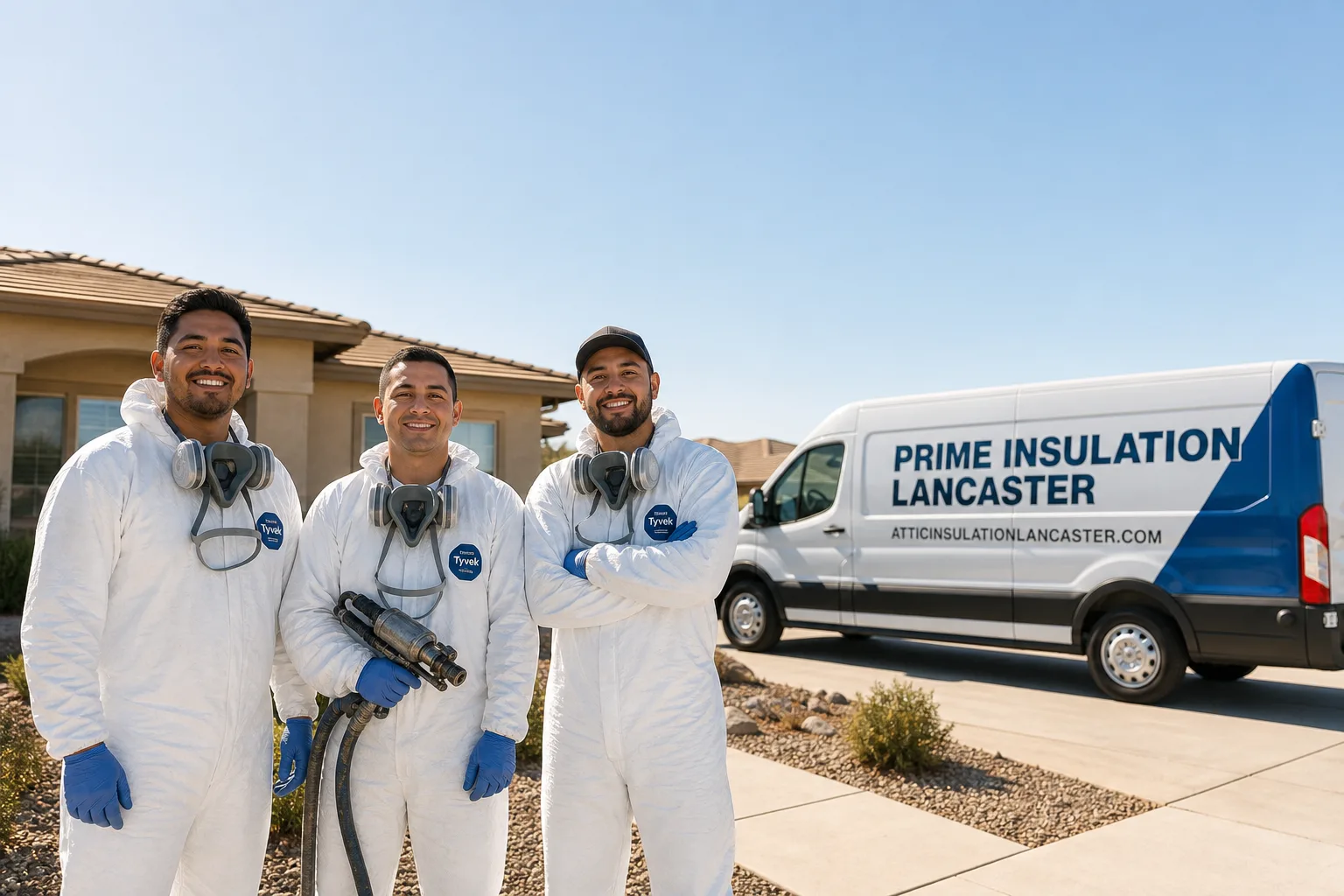
Fast, Reliable Crawl Space Encapsulation & Vapor Barrier Across Lake Los Angeles
If your Lake Los Angeles home sits above a dirt crawl space, the 2,700-foot elevation and Antelope Valley wind are working against you every single day. We’re Prime Insulation Lancaster, and our Crawl Space Encapsulation & Vapor Barrier team understands exactly what manufactured and modular homes in this community are up against: 130-degree seasonal temperature swings, relentless wind intrusion through belly-board seams, and moisture that has decades of practice finding its way up. A proper encapsulation job in Lake Los Angeles isn’t just laying plastic on dirt. It’s air-sealing the floor system first, then controlling vapor, then insulating to perform in both directions simultaneously.
Noel Estrada, our Owner & Lead Installer, personally assesses every crawl space we work in. That means the person who diagnoses your problem is the same person who will be under your home doing the work, not a rotating crew you’ve never met. Call us at (661) 545-6966 for a straight answer about what’s happening under your floors.
Key Takeaways:
- Lake Los Angeles sits at 2,700 feet with 100°F+ summers and nights that hit the 20s°F, a swing that demands bidirectional thermal performance.
- Manufactured homes from the 1960s-80s land boom have belly-board insulation that has sagged, compressed, or been destroyed by rodents.
- Air-sealing the floor system before adding vapor control or insulation is the highest-impact first step for this community’s housing stock.
- We’re based in Lancaster and respond to Lake Los Angeles regularly, typically scheduling assessments the same week you call.
- Free estimates. Direct owner involvement. No subcontracted crews.
Why Prime Insulation Lancaster Is Lake Los Angeles’s Preferred Crawl Space Encapsulation & Vapor Barrier Company
We’ve built our reputation in Lake Los Angeles by treating encapsulation as a whole-system job, not a plastic-roll product. Most homes here are manufactured or modular units from the 1970s through 1990s, and the original insulation under those homes was never designed for the conditions this desert actually delivers. Contractors who approach a Lake Los Angeles crawl space the same way they’d approach one in Lancaster or Palmdale miss what’s actually happening: the wind here is a different animal, the temperature swings are wider, and the housing stock needs a sequence built for it.
Every Lake Los Angeles job is led by Noel Estrada, our Owner & Lead Installer. When you call us, you talk to the person who will open the access panel and climb under your home. When you get a quote, it reflects what Noel actually saw, not what a salesperson guessed from a satellite photo. That direct accountability matters when the job involves the floor system your whole house rests on.
Our reach into Lake Los Angeles is consistent. We regularly schedule work along Avenue O, 170th Street East, and throughout the communities off Highway 138. If you’re in the east side near the lake bed itself or out toward the western edges closer to the county line, we know the access roads, the housing patterns, and the ways these homes were originally built.
Our Crawl Space Encapsulation & Vapor Barrier Services in Lake Los Angeles
Crawl Space Vapor Barrier
A vapor barrier in Lake Los Angeles has to do more than block ground moisture. The persistent wind that pushes through skirting gaps and belly-board seams also carries fine desert dust and dry air under the home, and in winter, soil moisture and radon get drawn upward through uncapped vents. We install 10-mil or heavier barrier material across the ground, run it up pier foundations, and seal seams with tape rated for long-term crawl space exposure. The result is a continuous plane that stops moisture migration before it ever reaches your floor cavity.

Crawl Space Encapsulation
Full encapsulation for a Lake Los Angeles manufactured home means air-sealing the floor system, sealing the skirting perimeter, and addressing the marriage wall before the vapor barrier goes down. We use foam board and tape rated for this application to close the gaps where air moves in and out, then install the barrier and condition the space. For homes with duct work running through the belly, we seal the duct belly as part of the same pass. Encapsulation here is as much about wind resistance as it is about moisture control.
Crawl Space Insulation
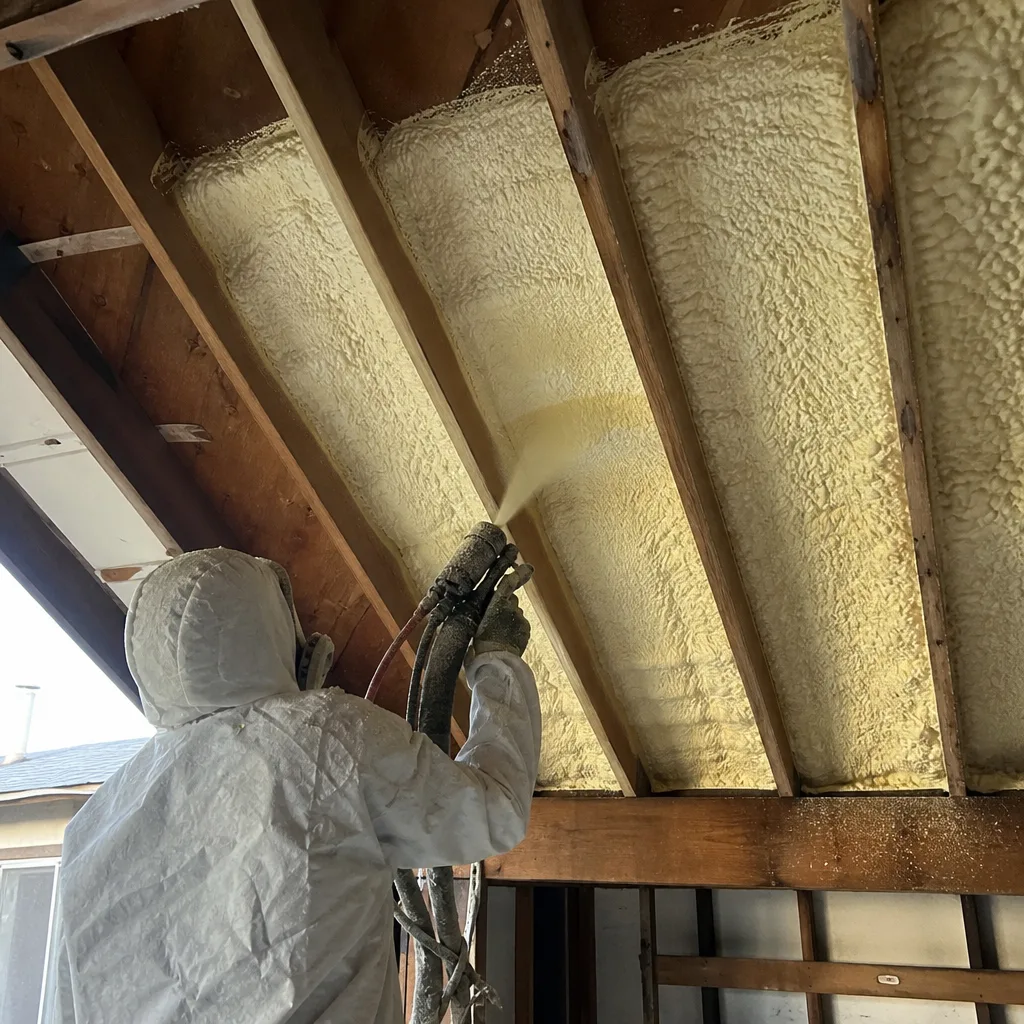
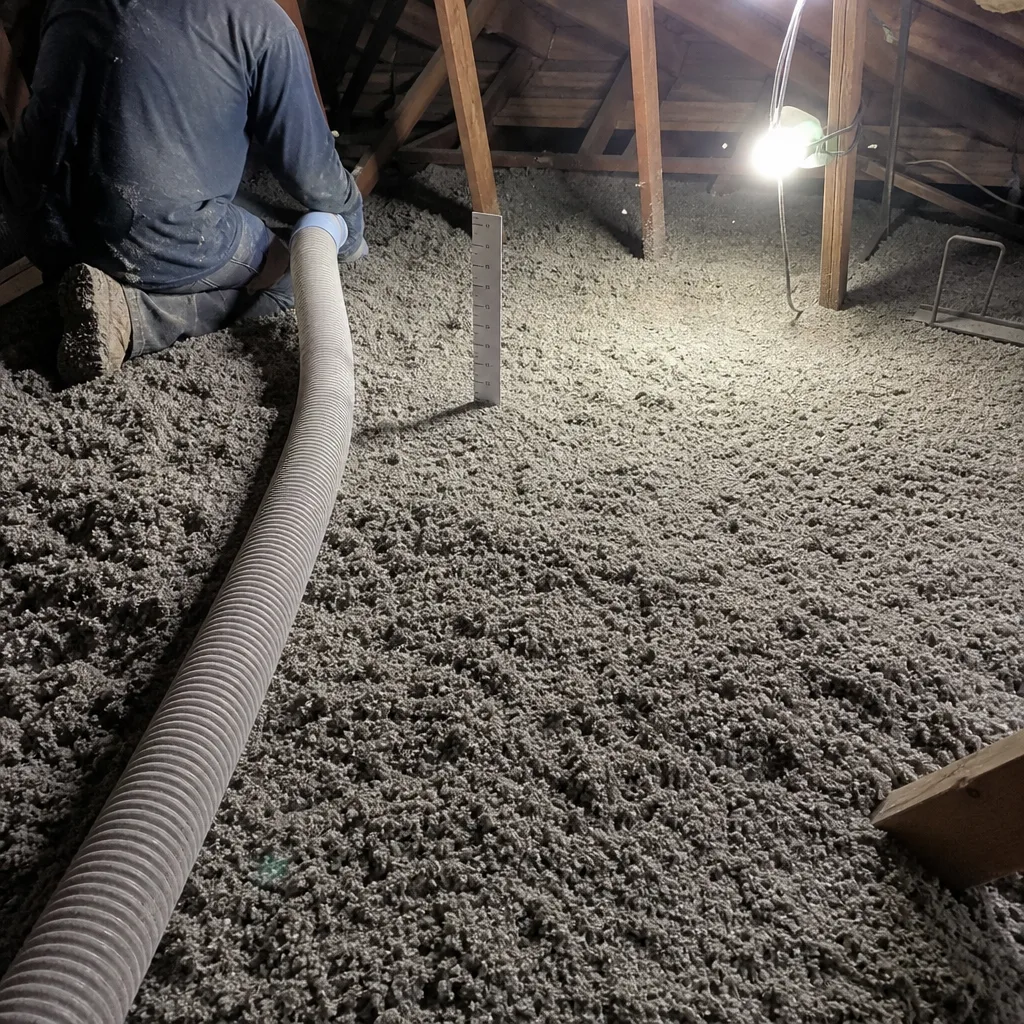
Most Lake Los Angeles manufactured homes have paper-faced fiberglass batts stuffed against the underside of the floor, resting on a sagging belly board. Years of dust, rodent traffic, and moisture have compressed those batts until their R-value is functionally near zero. We remove the failed material, air-seal the floor penetrations, and re-insulate with material matched to the actual conditions under your home, not whatever a warehouse had on hand. For this climate, the insulation has to handle triple-digit summers and below-freezing winter nights without degrading.
Crawl Space Moisture Control
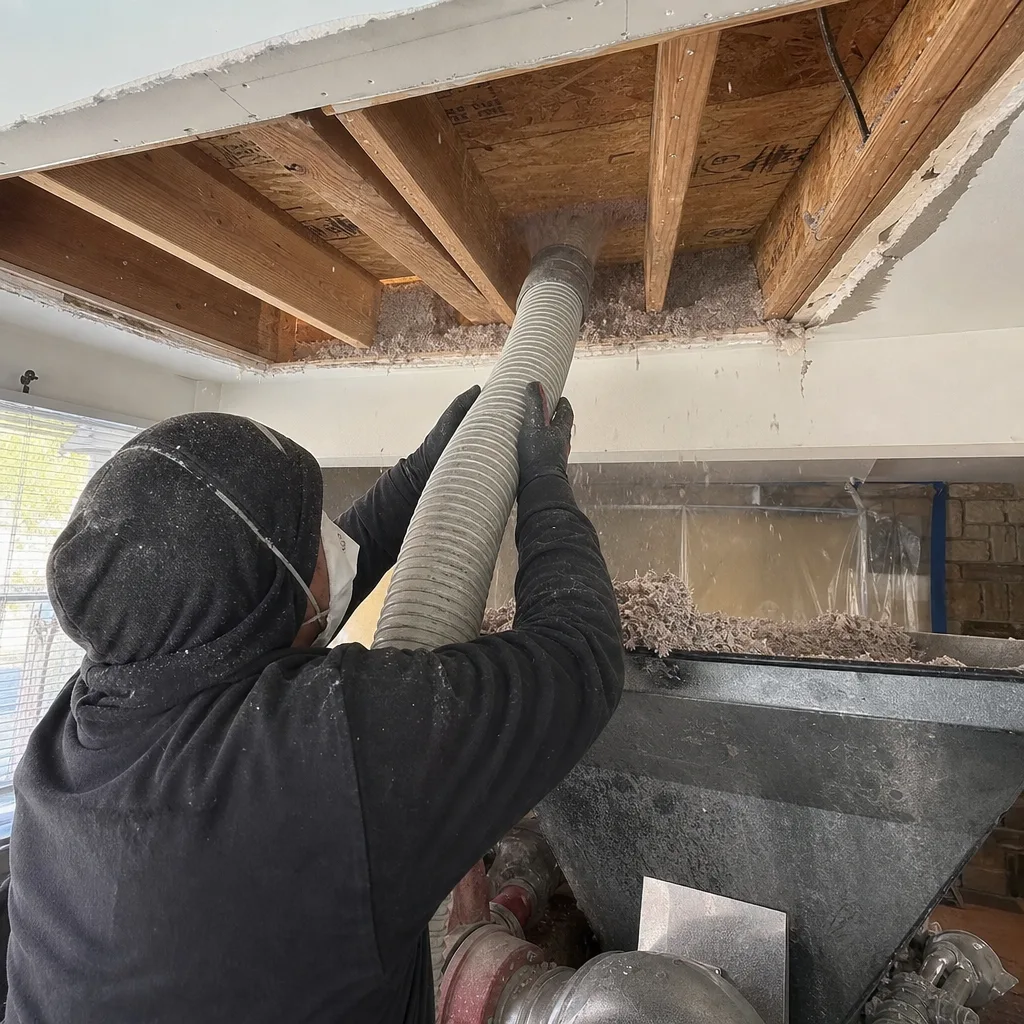
The temperature swing in Lake Los Angeles creates a specific moisture cycle. Hot days bake the ground under your home. Cold nights cause condensation along the floor joists and marriage wall. Over years, that cycle rots rim joists, wets the insulation, and turns a crawl space into a mold factory. Moisture control here starts with understanding where the water is actually coming from: ground evaporation, wind-driven humidity, or a leak in the plumbing run. We diagnose first, then apply the right combination of barrier, vent sealing, and insulation.
What happens when you call
- 1
A real person answersNo phone trees — you reach a local pro.
- 2
You get an upfront price rangeHonest numbers before anyone is dispatched.
- 3
A background-checked tech heads outLicensed & insured, dispatched right away.
- 4
You approve before work beginsNothing starts until you say go.
Trusted Brands We Service in Lake Los Angeles
We’re material-agnostic, which means the product going under your Lake Los Angeles home is chosen for this climate and housing type, not because we have a warehouse full of one brand. For encapsulation and vapor control work, we regularly install Johns Manville and CertainTeed products alongside Rockwool mineral wool where fire resistance and thermal stability matter. The desert diurnal swing punishes cheap materials fast. We carry what holds up here, and we stock matching tapes, foams, and fasteners so we’re not chasing parts mid-job. Eight top-tier brands, one contractor, and the right product for the specific situation under your floor.
Common Crawl Space Encapsulation & Vapor Barrier Problems We See in Lake Los Angeles Homes
- Sagging belly board from dust load and rodent nesting. The original belly board under many Lake Los Angeles manufactured homes has collected decades of blown dust and become a highway for rodents. Once it sags or tears, moist desert air rises directly into the floor cavity and soaks the insulation batts above it.
- Unsealed skirting gaps along the perimeter. Antelope Valley wind uses every gap in the skirting to push hot air under the home all summer and pull heated air out all winter. Those gaps also let insects and rodents enter freely. Sealing the skirting is a prerequisite for any barrier or insulation work to perform.
- Paper-faced batts wicked against the ground-side belly board. This is a recurring failure we see throughout the east side of Lake Los Angeles. The kraft paper facing traps moisture from below, mold follows, and the marriage wall starts sweating. By the time the floor feels cold, the insulation is already shot.
- Uncapped ground vents and radon paths. Older homes in this community often have vent openings that were never properly sealed or were added without understanding winter inversion conditions. When the desert floor cools at night, soil moisture and any radon present move upward through those openings into the crawl space and then into the living area.
Pricing for Crawl Space Encapsulation & Vapor Barrier in Lake Los Angeles, CA
A crawl space vapor barrier in Lake Los Angeles typically runs $1,800 to $4,200 depending on square footage and how much seam sealing the skirting requires. Full encapsulation with air-sealing of the floor system, marriage wall treatment, and perimeter sealing generally falls between $4,500 and $9,500 for the manufactured homes common to this area. Crawl space insulation replacement after removing failed batts adds roughly $2,000 to $5,000 depending on the material and the condition of the floor framing. Every quote includes a written breakdown before we start, and every quote comes from Noel Estrada, the person who will actually do the work. Call (661) 545-6966 for a free assessment, we’ll come out, look under the home, and give you numbers that mean something.
We Also Serve Cities Near Lake Los Angeles
Our service area extends across the Antelope Valley and into the foothills. We regularly handle Crawl Space Encapsulation & Vapor Barrier in Lake Los Angeles work from our base in Lancaster, and we’re active in Quartz Hill, Leona Valley, and Acton. If you’re anywhere along Highway 138 or the 14 corridor, we can get to you.
Serving Lake Los Angeles, CA — Our Local Coverage Area
We’re based in the Lake Los Angeles area and know this community well. Use the map below to see our service coverage — if you’re nearby, we can almost certainly help.
FAQs — Crawl Space Encapsulation & Vapor Barrier in Lake Los Angeles
A manufactured home in Lake Los Angeles has a belly-board floor system with a marriage wall running down the center, and wind infiltration through skirting gaps and belly seams is the dominant moisture and air-movement problem. A stick-built house in Palmdale has a continuous foundation and subfloor that doesn’t face the same wind-driven air exchange. The barrier under a manufactured home has to integrate with the skirting and the belly board, not just cover dirt. Call (661) 545-6966 and we’ll explain what your specific home needs.
The 130-degree annual temperature swing between summer highs over 100°F and winter nights in the 20s means every material in the crawl space expands, contracts, and deals with condensation cycles. Seams in cheap barrier materials fail fast under those conditions. We use 10-mil or thicker barrier material with tape rated for thermal cycling, and we choose insulation products that hold R-value through the full swing rather than degrading in heat. The material spec cannot be copied from a coastal LA job. It has to be chosen for the Mojave diurnal range.
Replace the insulation first, then encapsulate. Once the vapor barrier is sealed, failed insulation above it is trapped in a sealed environment, and any moisture already in those batts will stay there and rot the floor framing. We remove the old material, address any rodent damage or moisture damage to the joists and belly board, air-seal the floor system, install new insulation, and then close the space with the barrier. Sequencing matters more here than in other climates because the wind will re-wet any exposed insulation within a season.
Yes, rodent exclusion has to happen first. Encapsulating over an active rodent path seals the animals in and your insulation gets destroyed again within months. We work with pest control providers in Lake Los Angeles to sequence exclusion and damage repair before we install the barrier, because doing it in the wrong order wastes your money. Noel Estrada will tell you plainly if the home needs exclusion first, and we’ll coordinate the timeline so the encapsulation isn’t compromised.
Air-sealing the floor system, including the marriage wall, duct belly, and skirting perimeter, is the highest-impact first step for Lake Los Angeles manufactured homes. Adding insulation without sealing first means the Antelope Valley wind keeps moving air through the floor cavity and the insulation never performs to its rated R-value. We seal first, then insulate, then install the vapor barrier. That sequence is the difference between a job that actually reduces propane and electric bills versus one that just looks good in photos.
If you live in Lake Los Angeles and your floors feel cold in January or your cooling bills spike every July, something under the house is wrong. Call Noel Estrada at Prime Insulation Lancaster at (661) 545-6966. We’ll come out, look under the home, and tell you exactly what’s happening and what it’ll cost to fix. Free estimates, direct owner involvement, and encapsulation built for the Mojave Desert, not a coastal suburb.
Written by Noel Estrada, Owner & Lead Installer at Prime Insulation Lancaster, serving Lake Los Angeles and the Antelope Valley.